
Erratic pulse
5.0 on GoogleChest related symptom
Book your consultation Call 020 3576 2885

 Registered. Regulated. Trusted.CQC-registered clinic · GMC-registered clinicians
Related heart conditions

Heart disease
Heart disease (also known as cardiovascular disease) is an umbrella term for conditions affecting the heart and blood vessels.
Tests to further investigate concerns
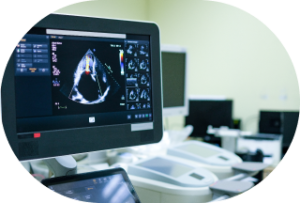
Echocardiogram
An echocardiogram is an ultrasound scan that shows the heart’s structure and surrounding blood vessels. It allows us to analyse how blood flows through them and assess the heart’s pumping chambers.

Stress tests
This test involves monitoring your heart rate whilst you are exercising – either on a treadmill or an exercise bike. This can help us detect any abnormalities while you are overexerting your heart.
Book your consultation with Dr Ravi Assomull today
Looking after your heart is the most important thing you can do to improve your longevity and quality of life in the long term.
We’re here for you during your journey to better heart health. We provide tests and management strategies to help identify what might be wrong and where you can improve your lifestyle to reach prime heart health.

Book an appointment today to speak to our expert Integrative Cardiologist, Dr Ravi Assomull, about your heart concerns.
You can email us at: enquiries@cardiologist.london
Or call us at: 020 3576 2885
Frequently asked questions
Short answers from Dr Ravi Assomull, consultant cardiologist - each one is also available as a video.
What are irregular heart beats?
Irregular heartbeats occur when your heart does not maintain its usual steady rhythm. Instead of beating consistently at 60 to 80 beats per minute, it may vary significantly, sometimes slowing or speeding up. This variation can feel like fluttering or skipping and often needs further investigation to determine the underlying cause. In this video, Consultant Cardiologist Dr Ravi Assomull explains what may be behind these changes and when to seek medical advice. Watch Dr Assomull's answer (0:50).
What is the difference between palpitations and an irregular heart beat?
Palpitations are sensations you feel in your chest, such as fluttering or skipped beats, while an irregular heartbeat refers to a confirmed variation in your heart’s rhythm. An irregular heartbeat is often linked to conditions like atrial fibrillation. In this video, Dr Ravi Assomull explores how palpitations and irregular rhythms are connected, what causes them, and when they may indicate a more serious heart issue. Watch Dr Assomull's answer (0:47).
What can cause irregular heart beats?
Atrial fibrillation is the most common cause of abnormal heart rhythm and affects over 1.5 million people in the UK. It can significantly raise your risk of stroke, making early diagnosis essential. In this video, Dr Ravi Assomull explains how atrial fibrillation affects the heart, and how starting the right treatment can reduce your risk of complications. Watch Dr Assomull's answer (0:40).