
Ambulatory ECG monitor
5.0 on GoogleAmbulatory ECG monitors can help record your heart’s activity during daily tasks. Read more to learn about the monitors we can offer and how they work.
Book your consultation Call 020 3576 2885

 Registered. Regulated. Trusted.CQC-registered clinic · GMC-registered clinicians
 Living with uncertainty about your heart can be stressful. Our 24-hour monitor provides clarity and comprehensive insights into your heart’s unique rhythm, helping you take control of your cardiovascular health.

Dr Ravi Assomull, Consultant Cardiologist and Founder
Video FAQs
View our short videos designed specifically to answer your questions


Summary
If you’ve been referred for an ambulatory ECG monitor, this video explains everything you need to know. Dr Ravi Assomull walks you through the entire process — from preparation and fitting to wearing the monitor and returning it.
Transcript
If you're watching this video, it's likely you've been referred to wearing an ambulatory ECG monitor. In this video, we walk you through what to expect on the day of your appointment. An ECG monitor or patch is a small wearable device that continuously records your heart's electrical activity, usually over 24 hours to 14 days. It helps your doctor see how your heart rhythm behaves as you go about your normal routine. On the day of your appointment, don't use body moisturisers, perfumes or powders as they can stop the electrodes from sticking properly. We may need to shave a small area of chest hair to help the electrodes attach securely. You can do this yourself the night before or we'll do it for you during the appointment. If you'd like a chaperone, just let us know in advance. When you arrive, you'll be asked to remove your clothing from the waist up. A cardiac physiologist will explain the process and prepare your skin using an alcohol wipe and a special pad. The electrodes will then be applied to your chest and the Holter monitor will be connected. If you're wearing it for more than 24 hours, we'll show you how to change the electrodes yourself. The whole process takes around 15 minutes. While wearing the monitor, you can carry on with your daily activities including showering. Just keep showers short and avoid getting soap or direct spray on the monitor. No baths or swimming though. Make sure to keep a diary of your symptoms and activities. This helps your doctor match any events to what your heart was doing at that time. If the patch starts to peel, press it back down, especially morning and night. If it won't stick, you can use medical tape to secure it. When your monitoring period is over, you can remove the patch yourself, then just drop off the monitor and your diary in the clinic. Your results will be analysed in a day or two, ready for us to review at your follow-up appointment.

Summary
Dr Ravi Assomull describes the difference between a standard ECG and an ambulatory ECG monitor. In this video, he explains how short recordings capture baseline electrical activity, while longer monitoring helps detect intermittent arrhythmias linked to symptoms.
Transcript
So a normal or 12 lead ECG is a scan of the electrical activity of the heart, taken typically over 10 seconds. And the focus here is to look at the electrical activity from all parts of the heart, from all 12 views of the heart. An ambulatory ECG is something that we actually ask you to carry with you. Typically, it's a patch we stick on your chest that you can wear for anywhere from 24 hours to up to two weeks. The patches we use allow you to exercise, shower, work without any intrusion to your regular activities of daily living. The key difference here is that an ambulatory ECG provides just one or two channels of electrical activity, but will give us an idea of your heart rhythm. And the benefit of an ambulatory ECG is that if you have symptoms such as palpitations, we can get symptom rhythm correlations so that we can see when you have symptoms of palpitations what your heart rhythm is actually doing at that point.

Summary
Dr Ravi Assomull, a Private Cardiologist in London, explains how different ECG tests are used to assess heart rhythm and symptoms. In this video, he describes when each test is appropriate, from baseline assessment to identifying arrhythmias during daily activity or exercise.
Transcript
So the choice as to what kind of ECG you need will be made after your initial consultation and you may actually need all three types of ECG, a normal ECG, an ambulatory ECG and an exercise ECG. But typically all our patients will get a normal 12 lead ECG. That really gives us an idea about the basic electrical activity of the heart. We think about it as a foundation of your cardiovascular health. So I would say everyone gets that. An ambulatory ECG typically for people we are worried about underlying arrhythmia as a possible cause for their symptoms. So this is a device you pop on your chest, you walk away with it, you carry on doing your daily activities. And whenever you get symptoms of palpitations or dizziness maybe even, we can see what your heart rhythm was doing at that time. Now an exercise ECG is something we organise when we would like to see what happens to you during exercise. Some people will say that they get dizzy during exercise or that they get palpitations during exercise. So an exercise ECG is a nice way of trying to precipitate what arrhythmia may be underlying those symptoms. Previously exercise ECGs were routinely used to figure out whether chest pain was caused by underlying coronary disease. More recent guidance is actually very much recommended against that. So we don't really use exercise ECGs for evaluation of chest pain of unknown cause.

Summary
An ECG (electrocardiogram) records the electrical activity of your heart from 12 different views, providing valuable insights into your heart rhythm and overall heart health. In this video, Dr Ravi Assomull explains how ECG results are interpreted alongside your medical history, examination findings, and blood pressure to guide diagnosis and treatment.
Transcript
An ECG is a tracing of your heart rhythm typically taken from 12 different views. This ECG tracing can be used in conjunction with your clinical history, your examination findings, including your blood pressure, to give us an overall impression of your heart health.

Summary
Dr Ravi Assomull explains the difference between an echocardiogram and an ECG. In this video, he outlines how ultrasound imaging assesses heart structure and valve function, while ECG measures the electrical activity of the heart.
Transcript
An echocardiogram is an ultrasound scan of the heart that really looks at the structure and function of the heart. And an echocardiogram will look at the heart muscle, how the heart is contracting, as well as the function of the four valves that reside within the heart. Are the valves opening well? Are they leaking? So an ECG isn't actually an imaging modality. It's just a representation of the electrical activity of the heart seen from 12 different views.

Summary
Dr Ravi Assomull explains how smartwatch ECG technology compares to clinical ECG testing. In this video, he highlights how wearable devices can help capture heart rhythm during symptoms when traditional monitoring may miss them.
Transcript
A smartwatch ECG is a relatively new form of technology which has had a tremendous value. In the past we've had people with palpitations, we've put an ECG monitor on for 24 hours, 7 days, even 14 days, and when we've done that they haven't had the symptoms and we haven't been able to establish whether there is any underlying arrhythmia. With a smartwatch ECG, because it's always on your wrist, we have the opportunity to capture your heart rhythm with a single lead ECG at the time of your symptom onset such as palpitations. So it will actually sometimes help us to get to the answer when conventional ambulatory ECGs haven't. A standard normal ECG is a 10 second snapshot of 12 views of the heart, we call it the 12 lead ECG. And an ambulatory ECG, as I've already said, is a device that we can put on the chest, but we're limited to a certain period of time where we can monitor your heart rhythm continuously, being from 12 days all the way up to 2 weeks.

Summary
Dr Ravi Assomull explains what level of fitness is required for an exercise ECG. In this video, he reassures patients that the test is suitable for most people and provides valuable insight into cardiovascular health regardless of fitness level.
Transcript
You don't need to be fit to have an exercise ECG, we just need you to be able to walk on a treadmill. So I wouldn't be embarrassed whether you can go for three minutes, six minutes, nine minutes. That in itself provides us with useful information about your underlying cardiovascular health.
Symptoms investigated
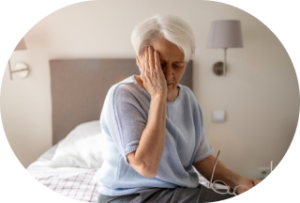
Fatigue or feeling weak
Fatigue is the feeling that you lack the energy or motivation to do anything physically and mentally. Sometimes, you may feel like you can’t keep your eyes open or find it difficult to do tasks because of tiredness.

Palpitations
Heart palpitations are the feeling that your heart is fluttering, racing, pounding, or like you’ve missed heartbeats. Palpitations can happen anytime, even while resting, and may be felt in the chest, neck, or throat.
Fainting
Fainting is a temporary loss of consciousness as a result of reduced blood flow to the brain. This can be caused by many different factors, including issues related to the heart.
Conditions diagnosed
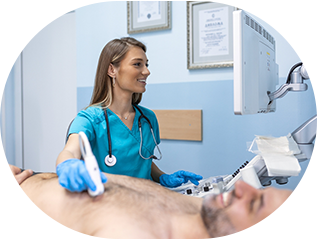
Heart block
This condition is when electrical impulses are blocked or delayed in your heart, affecting your heartbeat.
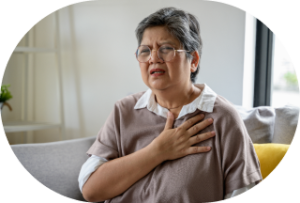
Arrhythmia
This condition is when electrical impulses are blocked or delayed in your heart, affecting your heartbeat.
Heart attack
A heart attack is when the blood supply to the heart gets blocked, causing damage to the muscle.
Book your consultation with Dr Ravi Assomull today
Looking after your heart is the most important thing you can do to improve your longevity and quality of life in the long term.
We’re here for you during your journey to better heart health. We provide tests and management strategies to help identify what might be wrong and where you can improve your lifestyle to reach prime heart health.

Book an appointment today to speak to our expert Integrative Cardiologist, Dr Ravi Assomull, about your heart concerns.
You can email us at: enquiries@cardiologist.london
Or call us at: 020 3576 2885
Frequently asked questions
Short answers from Dr Ravi Assomull, consultant cardiologist - each one is also available as a video.
Should you wear a health tracking device for heart monitoring?
Dr Ravi Assomull, a Private Cardiologist in London, explains the benefits of wearable health devices. In this video, he outlines how tracking heart rate, sleep and activity supports an integrative cardiology approach to long-term heart health. Watch Dr Assomull's answer (01:07).
What do you need to know about wearable heart monitors?
Dr Ravi Assomull, a Private Cardiologist in London, explains how wearable heart monitors track key health metrics. In this video, he discusses heart rate, sleep and activity data and how these devices support ongoing cardiovascular monitoring. Watch Dr Assomull's answer (01:55).