
Exercise can be incredibly beneficial in helping improve the heart’s health and reducing your risk of developing a harmful cardiovascular condition. But why is exercise so important?
In this infographic, we explain the reasons why it’s so crucial for your heart and how it can positively influence factors that can impact your heart going forward.
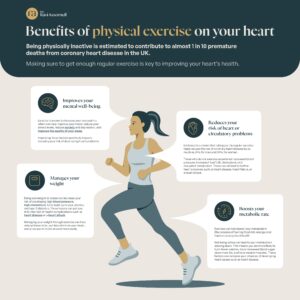
Being physically inactive is estimated to contribute to almost 1 in 10 premature deaths from coronary heart disease in the UK.
Making sure to get enough regular exercise is key to improving your heart’s health. Some of the benefits of being physically active can bring include the following:
Manages your weight
Being overweight or obese can increase your risk of developing high blood pressure, high cholesterol, fatty buildup in your arteries, and type 2 diabetes. These issues can put you at further risk of health complications such as heart disease or a heart attack.
Managing your weight through exercise can help reduce these risks, put less strain on your heart, and allow you to move around more easily.
Reduces your risk of heart or circulatory problems
Evidence has shown that taking part in regular exercise helps reduce the risk of coronary heart disease by as much as 21% for men and 29% for women
Those who do not exercise experience increased blood pressure, increased ‘bad’ LDL cholesterol, and disrupted metabolism. These can all lead to further heart concerns such as heart disease, heart failure, or a heart attack.
Improves your mental well-being
Exercise is known to increase your endorphins, which can help improve your mood, reduce your stress levels, reduce anxiety and depression, and improve the quality of your sleep.
Improving these factors positively impacts reducing your risk of developing heart problems.
Boosts your metabolic rate
Exercise can help boost your metabolism (the process of turning food into energy) and improve your general health.
Not being active can lead to your metabolism slowing down. This means you are more likely to burn fewer calories, have increased blood sugar, store more fat, and have weaker muscles. These factors can increase your chances of developing heart issues such as heart disease.
We can help guide you on how to manage meaningful changes to your lifestyle, including incorporating a regular exercise routine, based on your heart’s health. If you are worried about any irregular symptoms or have a heart condition and want support in starting exercise, we’re here to help you.
Visit our page on lifestyle and management treatment to learn more about the positive impact of exercise and how many hours you should aim to do a week.
Contact us for further information and to book a consultation today.